Research
Ecology and Enlightenment
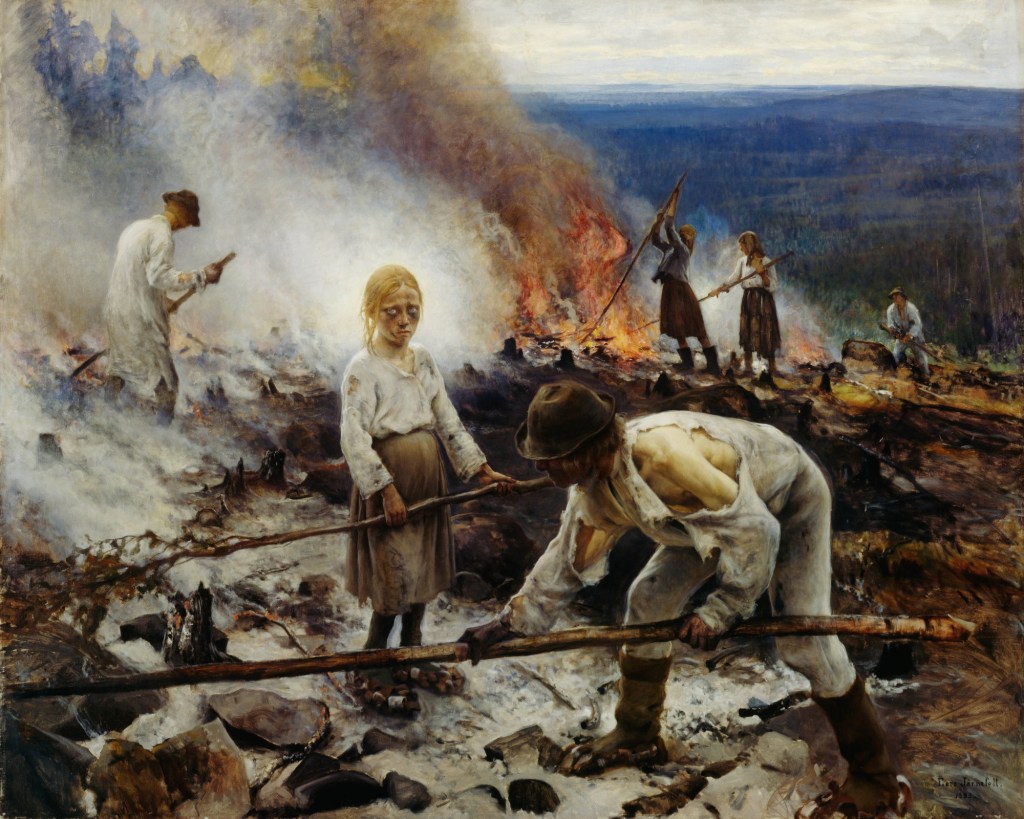
Many thinkers – from the ecofeminists to certain ecomarxists – place the origins of our current ecological woes with the enlightenment and modern European philosophy. Central intellectual positions from dualism to rationalism have been blamed for the objectification of nature, as well as the annihilation of indigenous cosmologies and ways of life.
Many of these critiques surely hold sway. One would find it hard to argue that thinkers like Descartes, Kant and Hegel have not been used to justify – or for that matter, themselves justified – unsustainable and violent practices pursued by the imperial core. Yet, the critics of these thinkers often neglect to show precisely where the faults lay, and whether with a degree of rational reconstruction, these thinkers positions might be remade in a less problematic fashion.
In my PhD I investigate prominent critiques of the enlightenment tradition through a close reading of some of its classics. My central focus is on Immanuel Kant’s Kritik der Urteilskraft, especially its second part, the critique of teleological judgement. I argue that Kant’s position can be systematically reconstructed to argue for a much more nuanced and robust position about the nature–culture division than at first glance appears. What turns out to be key is the question of the origins and legitimacy of a moral order of nature.
Transition and Fossil Fuel Abolitionism

What, exactly, do we want to achieve by posing the question of transition in the ecological context? First, to state that our current predicament, no matter how we divide responsibility for it or what exactly we understand its nature to be, should be superseded. Second, that what replaces it must be a new state, qualitatively different from the old.
Yet the concept of a ’transition’ – be it a clean, green or solar one – has come under increasing scrutiny. Perhaps most prominently Jean-Baptiste Fressoz has argued in his Sans transition that the concept, when employed carelessly, is a kind of smokescreen to hide the deeply symbiotic and cumulative nature of energy history and material use.
Yet the question stands as urgent as ever. We live in a dangerous constellation pushing the Earth system into disarray, and this dynamic must be severed. I am currently working on a paper on these topics I have tentatively titled Fossil Fuel Abolitionism. The paper is supposed to be an intellectual exercise of sorts. It investigates whether the most radical version the transition idea – the complete phaseout of fossil fuels in societal life – is tenable. Many critics of such an idea simply define away abolitionism by tinkering with the discount rate, and are thus not to be taken seriously. Similarly, most alternatives build in just as unacceptable levels of risk with technological lock-in, moral hazards and by underestimating political risk.
I wish to some day expand this project to encompassing food systems and land-use.
Money and Central Banking

From 2022 to 2024 I was a researcher in the project Justice in Crisis funded by the Jenny and Antti Wihuri foundation. During this time, I wrote my master’s thesis on the credit theory of money.
I would broadly split my interests in this area into monetary theory and institutional design.
In terms of monetary theory, scholars in anthropology and sociology often critique economics for ”depoliticising” money by cashing it out in terms of simple commodity exchange. These critiques also range the political spectrum from David Graeber to Joseph Schumpeter. Yet their claims are often very broad and lack philosophical references. In my master’s thesis I attempted to clarify one version of this argument with the help of social ontology.
In institutional design I am especially interested in the problem of discretion. In much of the world, monetary policy operates under Central Bank Independence (CBI). CBI is a significant limit on the government’s capacity to manage the macroeconomy from financial markets to countercyclical policy. Yet, CBI remains a remarkably little debated topic outside specialist circles. The capacity to socially manage investment has become all the more important with the rise in interlocking crises of varying temporalities, which all threaten the stability of our societies. Hence, we need a new regime of monetary and fiscal coordination.
I presented this work in conferences in Stockholm, Vienna and Helsinki. I have a WIP-version of one of these papers, though I have not yet begun to work on it seriously for publication.
 Jooseppi Räikkönen